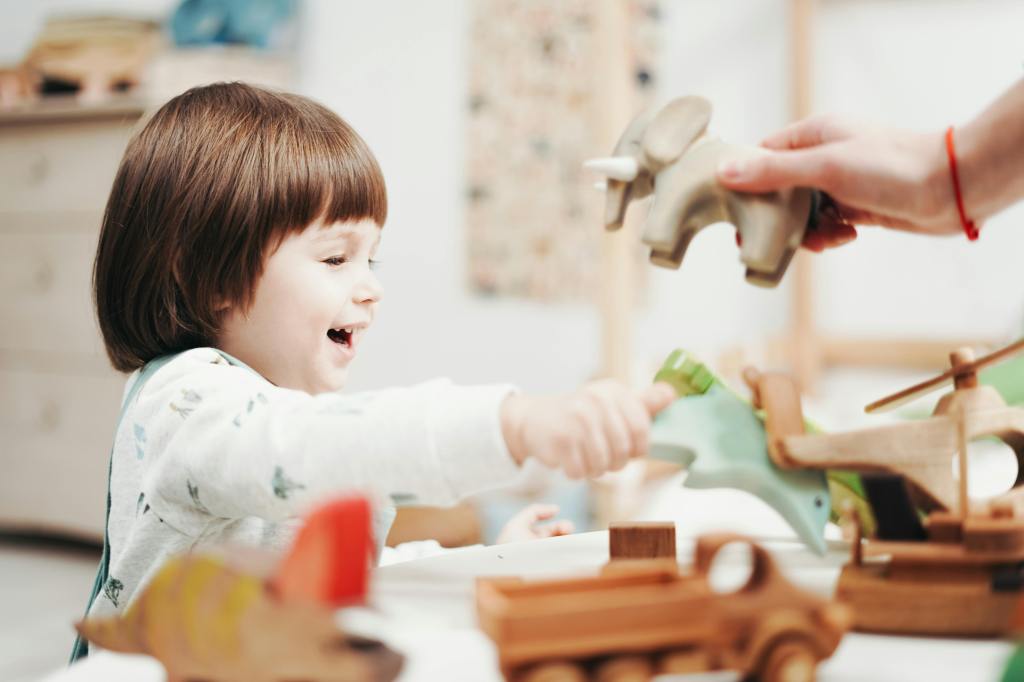
Sometimes I pause mid-cleanup and ask myself:
Are we overdoing it?
There are plush toys, wooden puzzles, pretend food sets, sensory bins, books, crayons, dolls… more than I ever had growing up.
And that’s part of it.
I didn’t have a lot of toys. Or books. Or chances to just play freely and learn through fun. So now, I find myself giving my toddler what I wish I had — tools to explore, imagine, and feel joy.
But I’ve also worried:
Does this make her spoiled? Am I giving too much?
So I looked into the science, and here’s what I found.
What Research Says About Toys and Child Development
Toys themselves aren’t the problem. How we use them matters far more than how many we have.
✅ The Good:
- Open-ended toys like blocks, dolls, and play kitchens promote creativity, social-emotional learning, and problem-solving (Ginsburg, 2007).
- Pretend play builds self-regulation, language, and empathy (Berk et al., 2006).
- Hands-on play (vs. passive toys like battery-operated buttons) supports real cognitive growth (Zosh et al., 2015).
🚫 The Not-So-Good:
- Too many toys at once can actually lead to distraction, decreased focus, and less meaningful play (Dauch et al., 2018).
- Toys that do too much (think flashing, talking, or one-button toys) reduce a child’s need to think creatively or engage deeply.
So no, having toys isn’t spoiling your child.
But flooding them with toys without structure or intention can dilute their value.
What Actually Matters More Than “How Many”
1. The Type of Toys
Opt for:
- Toys that do less so kids can do more (e.g., blocks > talking tablets)
- Items that can be used in different ways
- Toys that invite pretend play, sensory input, or problem-solving
2. How the Toys Are Used
A $5 toy used daily in creative ways matters more than a $50 toy that lights up but gets ignored.
It’s about engagement, not just ownership.
3. The Environment
A cluttered toy area can overwhelm toddlers. Fewer, visible choices support focus, calm, and longer attention spans.
So, Is It Bad to Give Lots of Toys?
No. It’s not “bad.” But here’s how to make sure your child benefits from what they have:
✔️ DO:
- Curate and rotate toys (keep out only a few at a time)
- Choose toys that grow with your child’s stage
- Engage in play with them, connection matters more than the toy
- Teach gratitude: “We’re lucky to have this. Let’s take care of it.”
✖️ DON’T:
- Use toys to avoid connection (“Here, play with this so I don’t have to deal with your feelings”)
- Feel pressured to buy every new thing, kids often benefit more from repetition
- Let guilt or your past drive over-giving without boundaries
How I Handle It at Home (What’s Worked for Us)
Here’s how I’ve found balance, without feeling like I’m spoiling:
- Toy Rotation: I keep out 5–8 toys at a time, stored accessibly in baskets or shelves. The rest are tucked away and swapped every week or two.
- Intentional Gifting: Before adding a new toy, I ask: Will she really use this? Does it offer open-ended play?
- Conversation About Care: We talk about putting toys away, treating them gently, and donating what we’ve outgrown.
And I remind myself: giving with love and intention is not spoiling.
It’s parenting with purpose.
The Bottom Line: What You’re Really Giving
If you’re offering toys that support play, learning, and joy, and pairing that with connection, structure, and emotional safety, you are not spoiling your child.
You’re helping her grow.
You’re breaking cycles.
You’re healing something in yourself and building something better for her.
And that’s powerful.
Developmental Toy Picks We Love (Affiliate Suggestions)
- Wooden Puzzle Set – great for problem-solving + fine motor
- Pretend Cooking Set – builds imagination and practical life play
- Mini Books Bundle – perfect for toddlers who love turning pages
- Chunky Crayons and Coloring Pads – encourage creative expression
- Soft Plush Dolls with Accessories – easy for role-playing and social-emotional skills
 Parenting Kindly
Leave a comment