Tantrums. Meltdowns. Emotional outbursts. Whatever you call them, they can turn a peaceful day upside down in seconds.
As parents, it’s easy to feel frustrated or helpless in those moments. We might be tempted to send our child to their room or put them in time-out; but often, that just leaves everyone feeling more disconnected.
What kids really need is a safe space to feel their feelings and tools to move through them. That’s where a calm-down corner comes in.
A calm-down corner is not a punishment. It’s not a “naughty chair.” Instead, it’s a cozy spot you create in your home where your child can go to reset, regulate, and return when they’re ready. Think of it as a “yes space” for emotions.
So how do you set one up in a way that actually works? Here’s a step-by-step guide, plus the essentials that can make all the difference.
Why a Calm-Down Corner Works
Children don’t come into the world knowing how to manage big feelings. Self-regulation is a skill that develops over time, and it requires practice.
According to child development research, the part of the brain responsible for calming down (the prefrontal cortex) is still developing well into early adulthood. This means kids often rely on external tools and caregiver support to regulate their emotions.
A calm-down corner gives them:
- A physical boundary → a defined spot that signals “this is where I go to reset.”
- Predictability → kids feel secure when they know what to expect.
- Practical tools → sensory objects, visuals, and comfort items that help them move through stress.
- Connection → a chance to learn emotional regulation with your presence, not in isolation.
Over time, children internalize these calming strategies and begin to use them on their own. That’s why creating one now can be such a gift for later.
Step 1: Choose the Right Spot
You don’t need a playroom or extra bedroom to make this work. Even the smallest home has a corner that can be transformed.
Look for a space that feels:
- Quiet → away from the busiest areas of the house.
- Safe → no sharp corners, heavy furniture, or breakables.
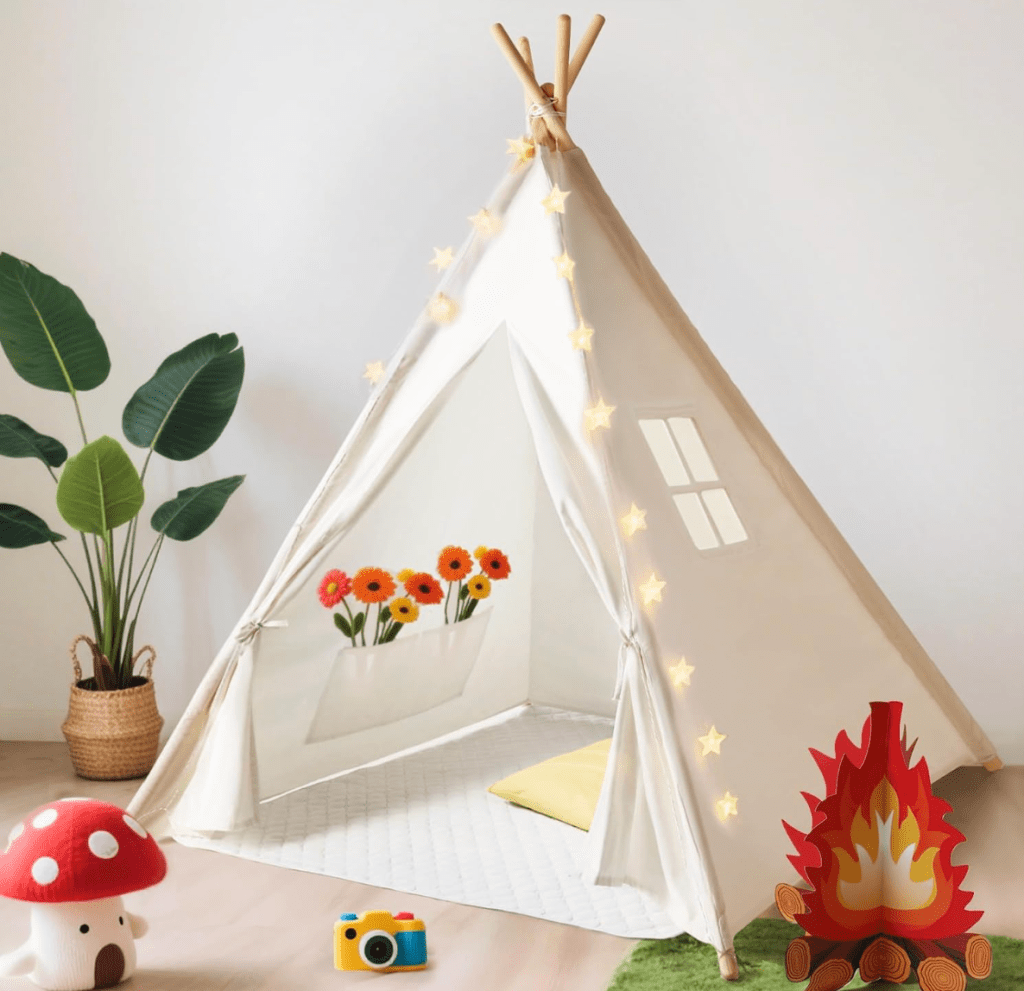
- Defined → kids understand boundaries best when there’s a clear visual cue, like a rug or canopy.
✨ Ideas: a corner of the living room, under the stairs, a cozy nook in the child’s bedroom.
👉 Amazon pick: Kids Teepee Tent
Step 2: Add Cozy Comfort
Big emotions feel overwhelming, so comfort matters. Think soft, inviting, and soothing.
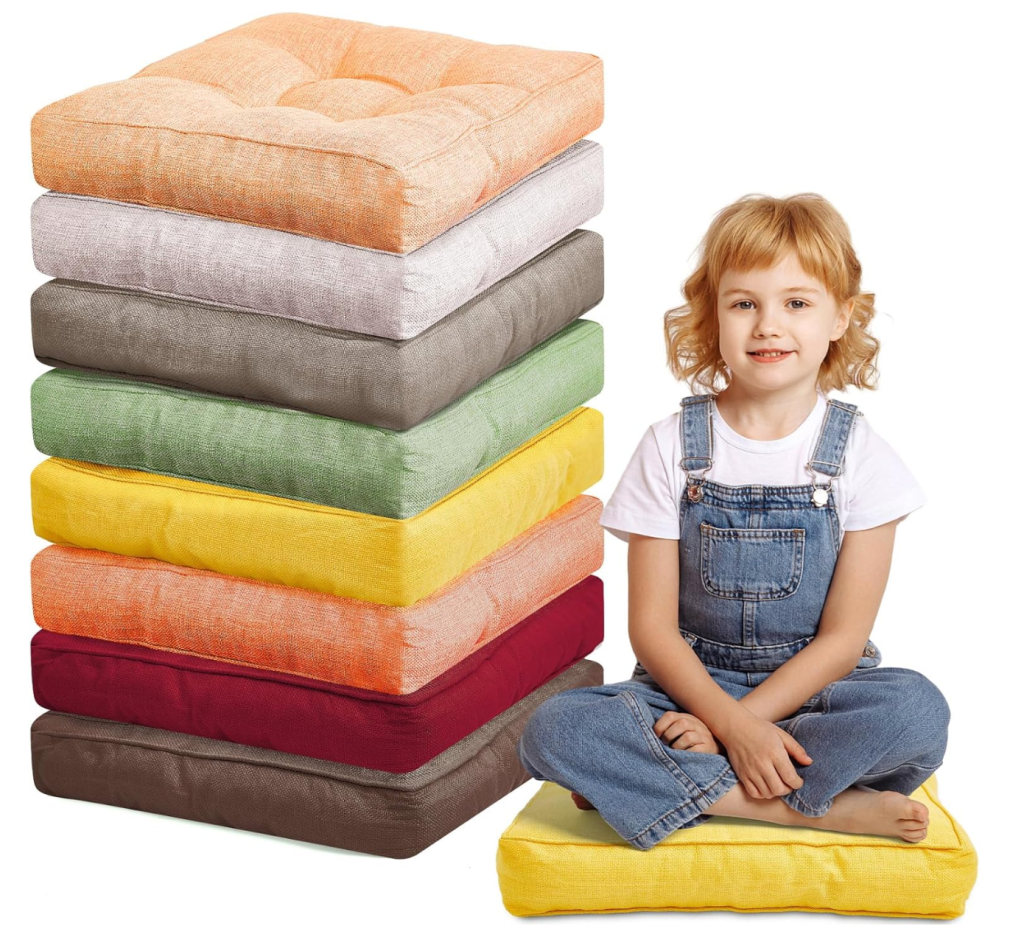
- Floor cushions or bean bags
- A small blanket or throw
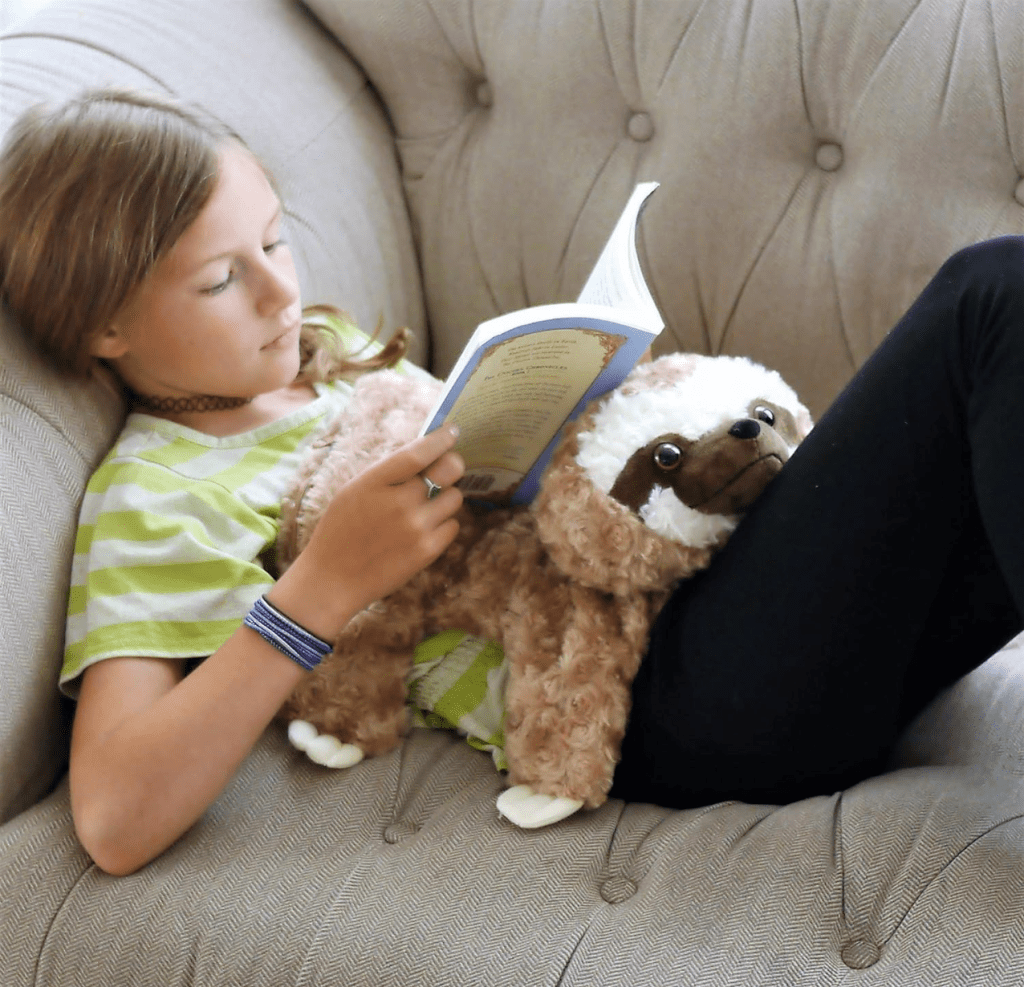
- A few beloved stuffed animals
- A weighted lap pad for extra grounding
👉 Try: Soft Floor Cushion | Plush Weighted Lap Pad
Step 3: Include Emotional Tools
Kids need help connecting their inner experience with words and visuals. Emotional tools support this learning process.
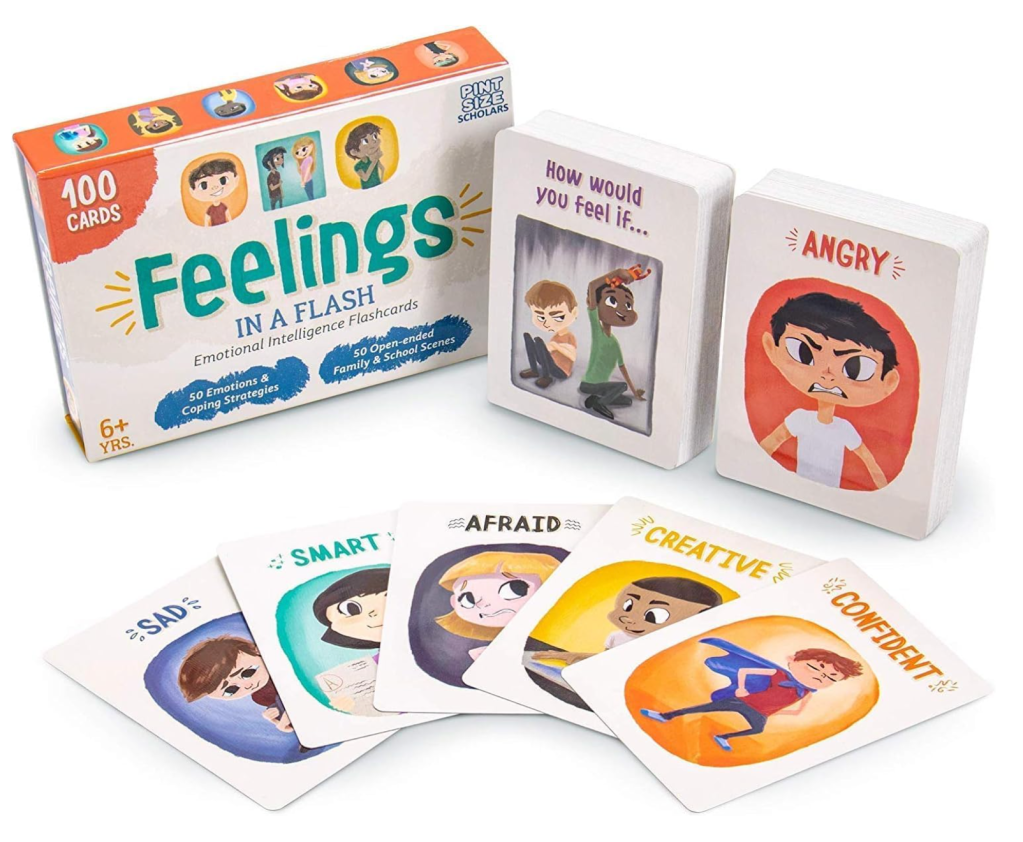
- Feelings charts or flashcards → kids point to how they feel.
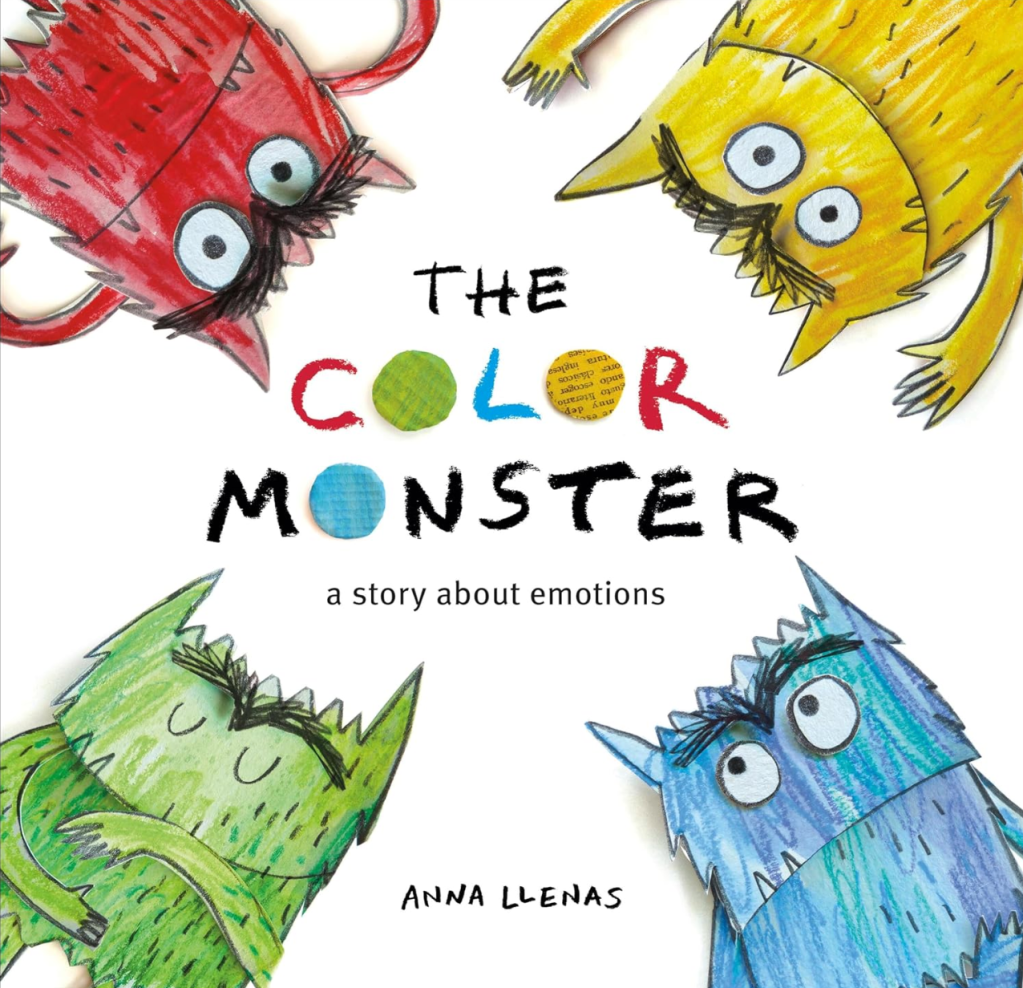
- Books about emotions → stories help normalize feelings.
- Mirror → kids can see their expressions and connect it to feelings.
👉 Try: Feelings Flashcards | Toddler Emotions Book
Step 4: Sensory Helpers That Work
Regulation often starts with the body, not words. Sensory play gives kids a hands-on way to calm.
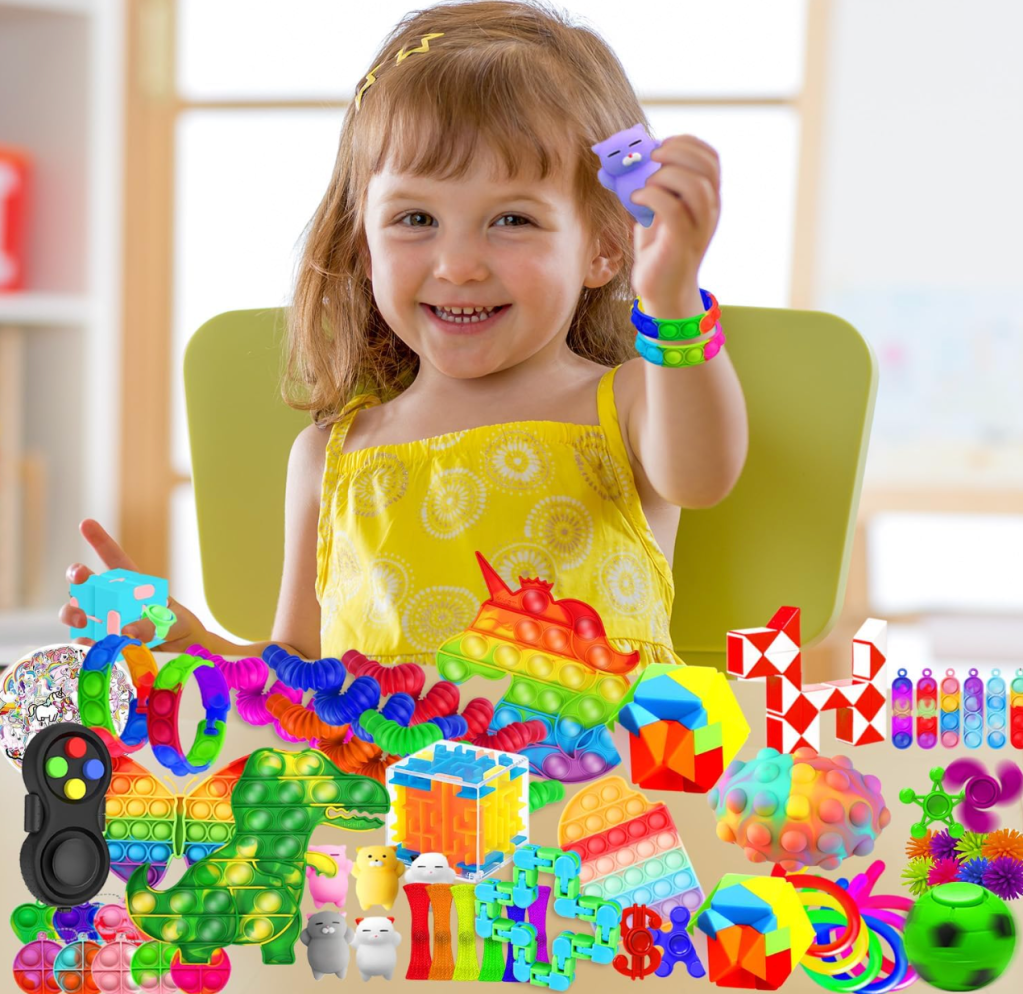
- Stress balls or squish toys
- Fidget spinners or pop-its
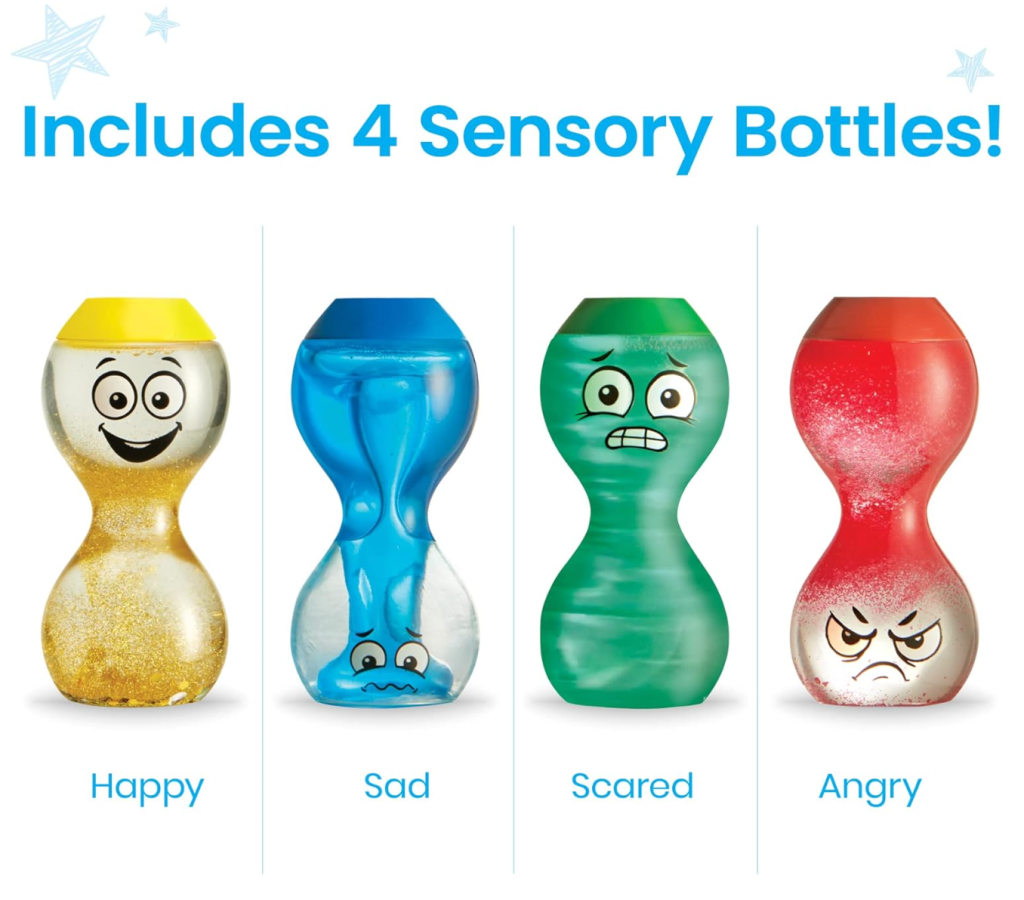
- Glitter jars or calm-down bottles
- Noise-canceling headphones (for sensitive kids)
👉 Try: Fidget Toy Pack | Calm-Down Sensory Bottles
Step 5: Breathing and Mindfulness Prompts
“Take a deep breath” isn’t easy for a 3-year-old. But make it fun, and suddenly, they can.
- Blowing bubbles (slow, steady breathing)
- Pinwheels or party blowers
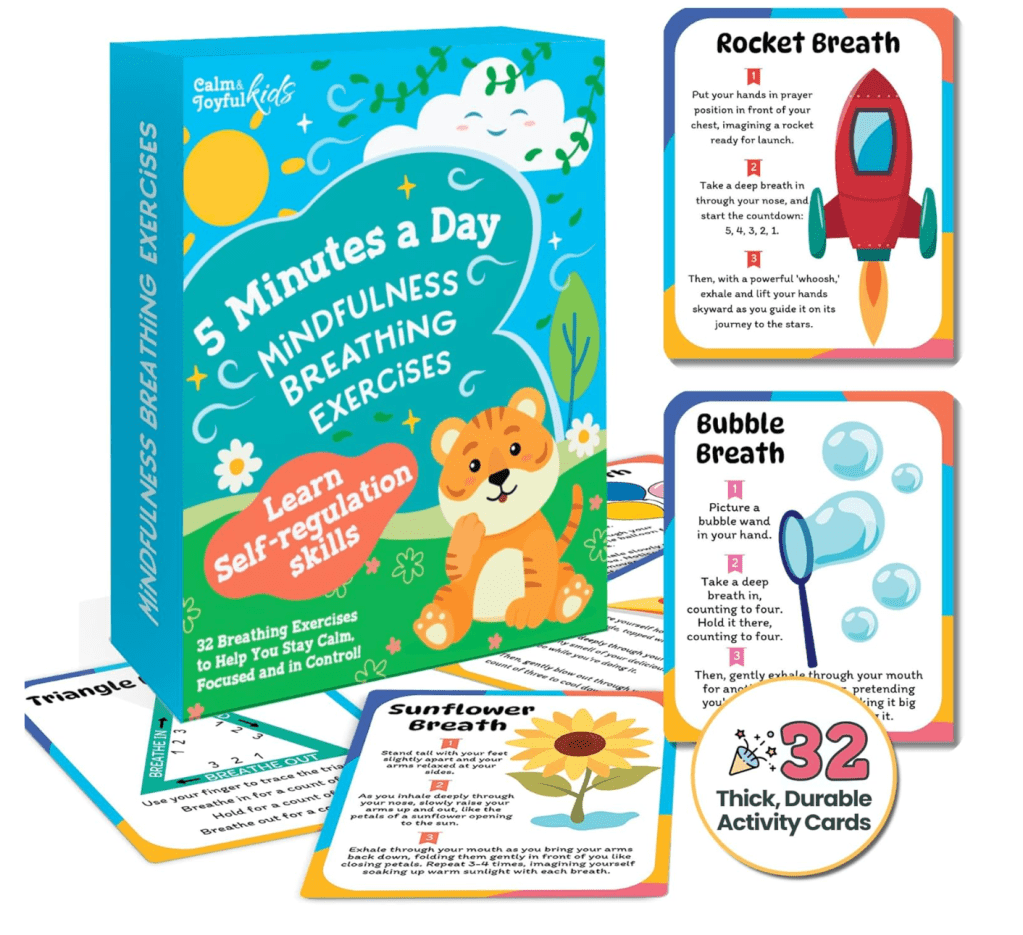
- Breathing cards or mindfulness games
- A simple mat for stretching
👉 Try: Breathing Exercise Cards
Step 6: Lighting and Atmosphere
Our environment directly impacts our nervous system. Harsh overhead lights? Not calming. Warm, cozy glow? Much better.
- Small night light projector
- Himalayan salt lamp
- Fairy lights or string lights
👉 Try: Kids Night Light Projector

Step 7: Parent Presence Matters
A calm-down corner isn’t always meant to be used alone. Sometimes your child needs you to sit beside them, modeling deep breaths or simply staying near.
You don’t have to talk or “fix it.” Just your presence can signal safety. Over time, your child will learn to use the space independently too.
What to Avoid in a Calm-Down Corner
- Too many toys → it’s not a play area, but a reset space.
- Screens → calming should come from connection and sensory tools, not distraction.
- Shaming language → never call it the “bad spot” or use it as punishment.
Final Thoughts
A calm-down corner doesn’t need to be Pinterest-perfect. It just needs to be intentional. Even one soft cushion, a stuffed animal, and a feelings chart can make a difference.
By giving your child a safe space to reset, you’re teaching them one of life’s most important skills: how to handle emotions with kindness and resilience. And that’s a tool they’ll carry long after childhood. 💛
 Parenting Kindly
Leave a comment