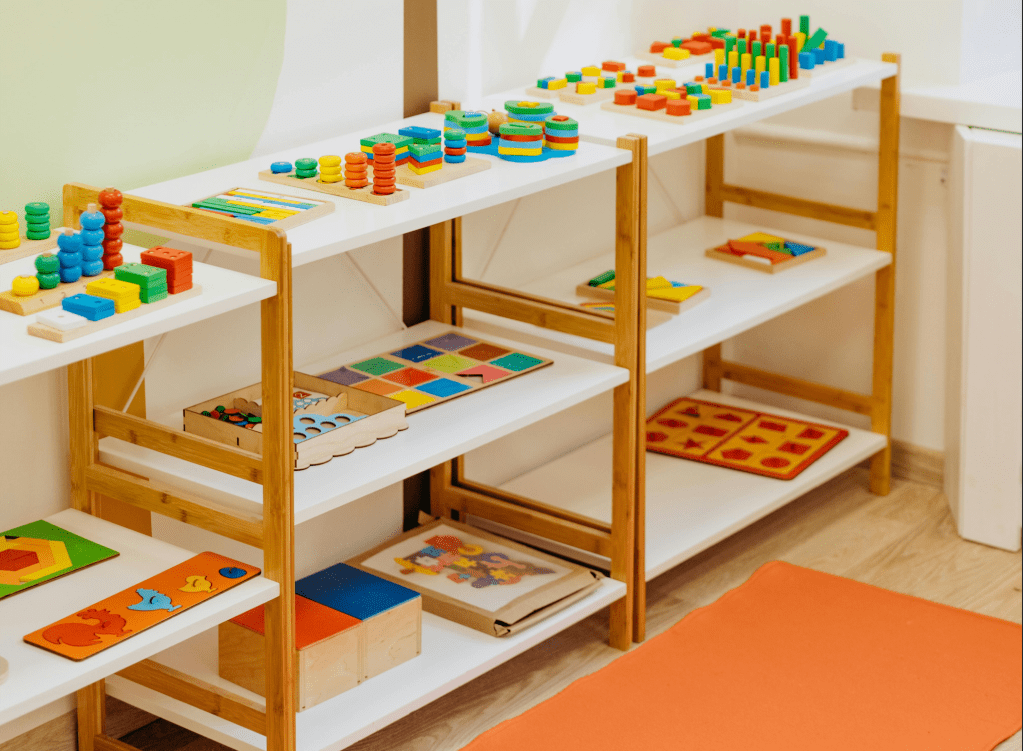
When you picture a Montessori playroom, you might imagine sleek wooden shelves, beautiful toys, and a perfectly organized space. But here’s the truth: you don’t need a big room or a big budget to create a calm, independent play space for your child.
At its core, a Montessori playroom is about simplicity — giving your child access to just a few open-ended materials that spark curiosity, creativity, and confidence.
Below, you’ll find practical setup ideas, storage tips, and some of our favorite Montessori-inspired products, so you can start creating a space that truly supports your child’s growth, no matter your budget or home size.
1. Start With a Low Shelf
A low shelf helps your toddler see and reach their toys independently — no need to ask for help every time. Keep 6–8 toys accessible and rotate them weekly to keep things fresh.
Amazon Picks:
- IKEA-style wooden shelf alternative – sturdy, minimal, and toddler-height.
- Simple bamboo shelf – perfect for small spaces.
Tip: Keep baskets or trays on the shelves so toys look inviting and easy to return after play.
2. Choose a Few Open-Ended Toys
Montessori-friendly toys encourage creativity, problem-solving, and independence — no flashing lights or buttons needed.
Amazon Picks:
- Wooden Rainbow Stacker by Grimm’s – great for building, sorting, and color play.
- Montessori Object Permanence Box – a favorite for hand-eye coordination.
- Classic Wooden Blocks Set – endless possibilities for imaginative play.
Tip: Less is truly more. Kids play deeper when there’s less visual clutter.
3. Add a Simple Art Corner
Art supports focus, self-expression, and creativity — all core Montessori principles.
Amazon Picks:
- Adjustable toddler art table and chair set – grows with your child.
- Washable crayons and markers – perfect for easy cleanup.
- Open art storage trays – keeps supplies organized and visible.
Tip: Store art materials where your child can access them safely. Offer real tools — scissors, tape, brushes — with supervision.
4. Include a Cozy Reading Nook
A reading corner creates a calm space for quiet time and emotional regulation.
Amazon Picks:
- Forward-facing bookshelf – displays books so covers face outward.
- Floor cushion or mini bean bag – cozy and easy to move around.
- Soft, warm lamp with dimmer – creates a calm reading atmosphere.
Tip: Rotate books just like toys — keeping only a few out helps your child truly engage with what’s available.
5. Bring Nature In
Montessori environments celebrate connection to nature. Even a few small touches can make your playroom feel more grounded.
Ideas:
- Place a small indoor plant your child can help water.
- Add a nature tray with pinecones, leaves, or shells.
- Use natural materials — wood, cotton, linen — whenever possible.
Amazon Picks:
- Child-sized watering can – perfect for little hands.
- Mini bamboo rug – warm, natural texture for playtime.
6. Keep It Rotated and Simple
A Montessori playroom evolves with your child. Every few weeks, rotate toys based on what your toddler is interested in, it keeps playtime engaging without constantly buying new things.
Store extras in clear bins in a closet or under the bed, and reintroduce them later. You’ll be surprised how “new” old toys feel again.
Final Thoughts
A Montessori playroom isn’t about perfection — it’s about intention. It’s a place where your child can explore, concentrate, and grow confident in their independence.
Whether you’re working with one shelf in your living room or a full play space, start with what you have. Add slowly, with purpose. Your child doesn’t need more, they just need you to make space for meaningful play.
 Parenting Kindly
Leave a comment